Every day, the healthcare sector faces increasing challenges, ranging from global pandemics and natural disasters to recurring operational pressures. This highlights the importance of understanding what crisis management in hospitals is, as it represents the foundation that ensures the continuity of care delivery at the highest levels of efficiency and enhances the quality of healthcare services. A hospital that possesses a robust crisis management system is better able to confront emergencies without disrupting vital services, protect lives, and preserve the reputation of its medical institution. This makes specialized training in this field a strategic step for anyone seeking excellence and professionalism in the healthcare sector.
What is crisis management in hospitals, and why does it represent a core pillar in the continuity of healthcare services?
Crisis management is defined as a systematic process in which an organization uses effective strategies to deal with sudden changes or major adverse events, while maintaining business continuity and minimizing potential losses. These strategies include establishing clear policies and procedures to mitigate the effects of crises and prevent them as much as possible.
In the healthcare sector, crisis management is a complex task due to the sensitivity of the field and its direct impact on human lives. Traditional “what-if” based plans often fail to address major disasters such as the COVID-19 pandemic. Therefore, all healthcare professionals must develop precise and integrated crisis management plans and deal effectively with emergency situations.
Crisis management in healthcare is an essential part of health services management, which also includes handling cyberattacks, data breaches, and other operational risks. Accordingly, professionals in this sector must acquire core emergency response skills to ensure the continuity of medical services and the safety of both patients and staff.
Crisis management in hospitals is one of the fundamental pillars for the continuous improvement of healthcare services in hospitals, for several reasons, the most important of which are:
- When a hospital lacks a well-structured crisis management plan, it exposes itself to interruptions in vital services, leading to aggravated health damage and increased mortality rates.
- Crisis management contributes to ensuring the continuity of operational processes, thereby maintaining uninterrupted patient care even under extreme pressure or during catastrophic events.
- Through a strong emergency plan and rapid, flexible management, hospitals maintain the trust of patients and the community, improve institutional reputation, and limit long-term health and financial consequences.
- Crisis management ensures coordination among different hospital departments and external entities, enabling rapid and effective responses to patient surges or resource shortages, thereby enhancing the healthcare system’s adaptability.
Key types of crises faced by hospitals and how to deal with them effectively
There are several common types of crises in hospitals, each requiring a well-structured response mechanism, including:
1- Pandemics and widespread infectious diseases:
Proper response:
- Activate epidemiological surveillance systems within the hospital to detect early cases and report them to relevant health authorities.
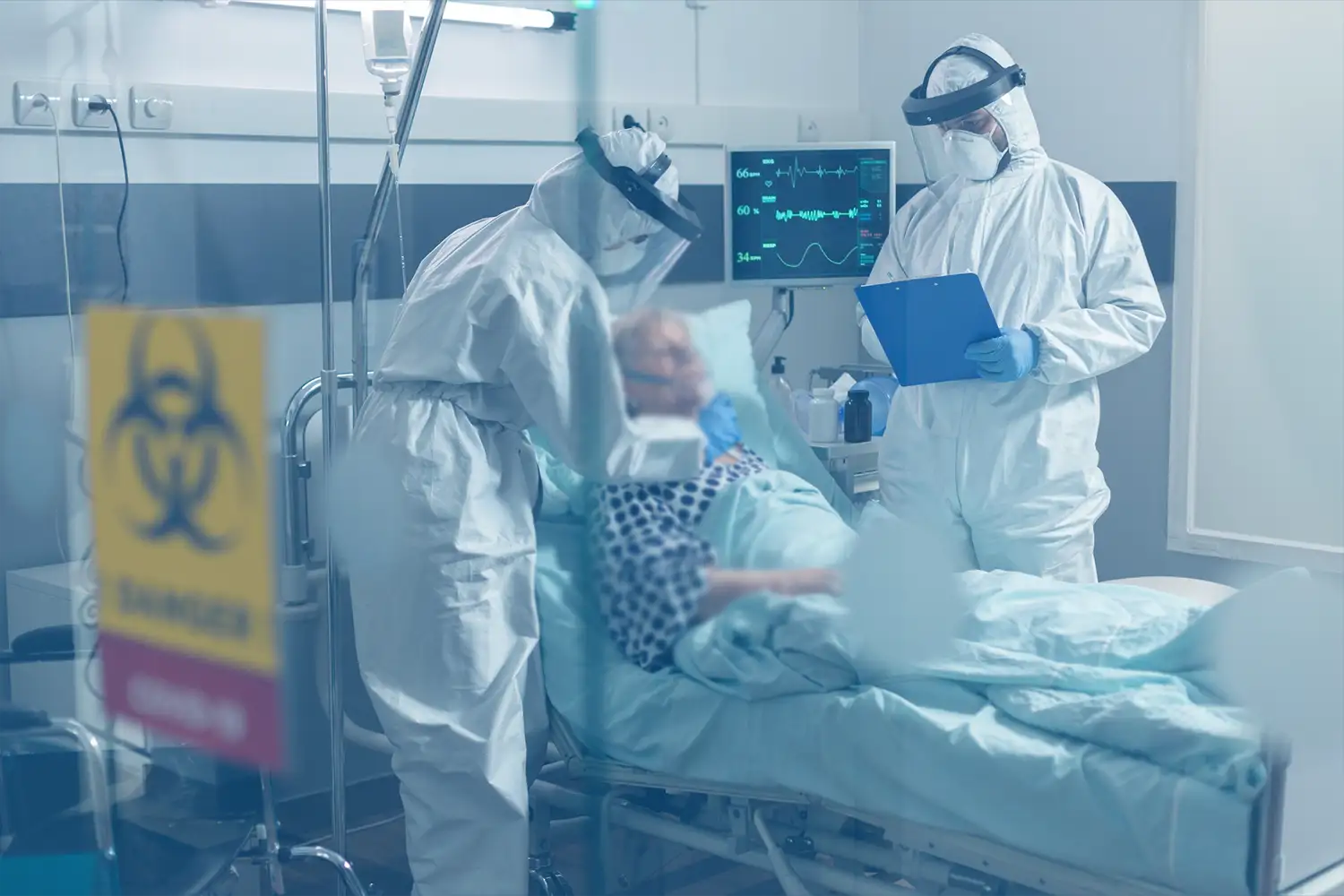
- Implement infection prevention and control (IPC) protocols, isolate suspected cases, distribute personal protective equipment (PPE), and train staff on its proper use.
- Expand bed capacity by opening temporary units and applying triage procedures to prioritize cases.
- Activate the Emergency Operations Center (EOC), coordinate referrals with other hospitals, and share resources.
- Ensure continuity of supply chains for medications and essential supplies.
2- Mass casualty incidents:
Proper response:
- Activate mass casualty response plans and implement HICS or a similar incident command model to distribute roles.
- Apply field triage protocols to rapidly transfer patients to appropriate levels of care.
- Increase capacity by converting non-critical units and activating reception agreements with nearby hospitals.
- Conduct regular field drills with external agencies (ambulance services, civil defense, police) to enhance coordination.
3- Natural disasters (earthquakes, floods, hurricanes):
Proper response:
- Apply an all-hazards approach in emergency planning, identifying local risks and establishing safe internal and external evacuation strategies.
- Secure critical infrastructure (backup power, water, IT systems) and establish alternative service delivery sites.
- Organize engineering teams and conduct rapid structural safety assessments before reopening affected departments.
- Coordinate directly with governmental and relief agencies to allocate resources and distribute patients.
4- Disruption of critical infrastructure (electricity, water, communications):
Proper response:
- Maintain tested backup power sources, water reserves, and essential stocks of medications and supplies.
- Implement minimum operations plans to preserve critical functions (life-support equipment, operating rooms, intensive care units).
- Establish backup communication channels (radio, satellite phones, alternative mobile devices) and patient data transfer plans if needed.
- Secure emergency service contracts with utility providers to accelerate restoration.
5- Cyberattacks and data breaches:
Proper response:
- Adopt advanced cybersecurity policies, including regular encrypted backups, continuous system updates, and isolation plans for affected systems to prevent spread.
- Maintain a cyber incident response plan linked to the overall emergency plan, with designated contact points for national cybersecurity teams or service providers.
- Conduct cyberattack simulations to ensure system recovery and continuity of critical operations.
6- Supply chain disruptions and shortages:
Proper response:
- Identify key suppliers and establish emergency contracts and resource-sharing agreements with alternative suppliers and partner facilities.
- Maintain strategic stockpiles of medications and supplies, with defined reorder points and minimum stock levels.
- Implement flexible distribution mechanisms and identify safe alternatives when primary suppliers are unavailable.
- Conduct regular inventory monitoring and use automated tracking systems to predict shortages early.
7- Internal incidents such as fires or hazardous material leaks:
Proper response:
- Establish clear internal evacuation plans with alternative routes and safe assembly points, and conduct regular fire and rescue drills for staff.
- Provide chemical spill containment equipment and specialized teams for hazardous materials, with protective measures for staff and the environment.
- Engage local emergency response teams and ensure immediate reporting for multi-agency response.
8- Staff shortages or deterioration of occupational health conditions:
Proper response:
- Develop human resources emergency plans, including reserve staff lists, staff-sharing agreements with other institutions, and flexible shift scheduling to prevent burnout.
- Provide psychological and social support programs for staff and rapid medical care for those injured during crises.
- Implement policies to protect staff from infections and occupational hazards, with continuous safety training.
- Practical steps to build a strong hospital crisis management system
Crisis management in hospitals is not conducted randomly but requires precise and well-planned steps, as follows:
1- Establish governance structure and appoint a crisis management team:
A specialized senior committee is formed, comprising hospital executives, with clearly defined authorities and responsibilities to ensure rapid and accurate decision-making. It is recommended to adopt an organized leadership model such as the Hospital Incident Command System (HICS) to unify roles and define authority levels during emergencies. A written crisis management policy should also be developed, outlining the system’s scope, objectives, and leadership commitment to implementation and continuous updates.
2- Risk assessment:
A comprehensive assessment of potential risks is conducted, including pandemics, natural disasters, cyberattacks, and infrastructure failures. Each risk is evaluated based on likelihood and impact to prioritize actions and develop response plans accordingly.
3- Business Impact Analysis:
This stage identifies critical hospital departments such as emergency services, intensive care units, laboratories, and IT systems. Maximum allowable downtime (RTO) and minimum required resources are defined to ensure continuity under critical conditions.
4- Emergency and business continuity planning:
Detailed plans are developed for various scenarios, including pandemics, earthquakes, infrastructure outages, and cyberattacks. These plans include activation mechanisms, contact lists, alternative sites, and patient transfer strategies. Operational plans are divided into three phases: minimum operation, partial operation, and full recovery.
5- Establishment of an Emergency Operations Center:
Primary and alternative locations for the command center are designated and equipped with backup power, multiple communication systems, maps, and resource identification tools. A trained team manages data and decision-making, and an essential emergency stockpile is maintained, including critical medications, PPE, and generators.
6- Internal and external communication systems during crises:
Communication is a critical element of crisis management. Updated contact lists should include staff, government entities, neighboring hospitals, and key suppliers. Pre-prepared message templates should be available to ensure rapid and clear information flow during emergencies.
7- Surge capacity and staffing management:
Hospitals must have flexible plans to expand operational capacity when needed, including opening additional units, converting non-critical rooms into temporary treatment areas, and establishing field clinics. Reserve staff lists and support programs for affected personnel are essential to maintain service continuity.
8- Supply and logistics management:
Supply management is a cornerstone of crisis continuity. Key suppliers should be identified in advance, alternative agreements established, and strategic stockpiles maintained with defined minimum thresholds. Clear resource distribution mechanisms and immediate alternatives should be in place.
9- Physical and cybersecurity:
Hospitals must ensure readiness of physical security systems, including access control and screening points, to protect patients, staff, and facilities. On the cybersecurity side, information systems should be secured through encrypted backups and a cyber response plan that includes isolating affected systems.
10- Training, qualification, and drills:
Regular training is essential to crisis management effectiveness. Periodic drills (annually or quarterly) simulating real scenarios should be conducted in cooperation with external entities. Performance indicators are used to evaluate outcomes and identify improvement areas, which are documented for future planning.
11- After-action review and continuous improvement:
Following each crisis or drill, an After-Action Review (AAR) meeting is held to evaluate performance and document lessons learned. Plans and procedures are updated accordingly, risks reassessed, and all documentation stored within the institutional knowledge management system.
12- Key performance indicators (KPIs) to monitor readiness:
KPIs help track readiness and response levels, including emergency center activation time, percentage of trained staff, days covered by strategic stockpiles, and time required to restore critical functions. These indicators are reviewed regularly to ensure continuous improvement.
The role of training and qualification in developing medical and administrative teams’ capabilities during crises
- Training equips medical and administrative staff with essential concepts and skills for crisis response (such as triage, incident communication, and evacuation).
- Identifying pre-training gaps through gap analysis to design targeted programs addressing weaker areas.
- Enhancing rapidity and readiness, as practical training improves teams’ preparedness and performance in dynamic environments.
- Strengthening teamwork and interdepartmental coordination through joint exercises and simulations that enhance collaboration, communication, and decision-making.
- Sustaining competence over time, as research shows that regular training and continuous evaluation maintain performance under pressure.
- Increasing staff confidence and engagement, as well-trained personnel are more willing and prepared to act during crises.
- Empowering leaders and supervisors to make sound decisions by training them in crisis management strategies and leadership under pressure.
- Developing technological and simulation skills, as virtual and simulated training enhances teams’ ability to handle complex, unfamiliar situations.
- Reducing operational errors and improving patient safety, as trained teams respond more effectively and safely to emergencies.
- Integrating training into institutional quality improvement frameworks, making it part of a continuous improvement system rather than a standalone activity.
How does Future Vision for Health Training help you master hospital crisis management?
After understanding what crisis management in hospitals entails, here is how Future Vision for Health Training can help you achieve professional excellence:
1- Programs accredited by the Saudi Commission for Health Specialties:
The company offers accredited programs that enhance healthcare professionals’ skills and prepare them to handle disasters and critical situations in line with recognized national standards.
2- Accredited healthcare courses with credit hours in emergency management and business continuity:
One of the most prominent accredited courses in Riyadh focuses on emergency management and business continuity in hospitals, equipping participants with the knowledge to establish effective crisis management systems, from planning to corrective action during disasters.
3- Realistic simulation of field scenarios:
The company relies on hands-on training through simulations of real crises such as power outages, fires, pandemics, and cyberattacks, enabling participants to apply leadership and decision-making skills in a safe, realistic environment.
4- Multi-level training for medical and administrative teams:
Accredited courses target all job levels, from emergency teams and physicians to administrators and hospital managers, ensuring integrated performance and improved collective response.
5- Certified trainers with field experience:
A distinguished group of accredited experts in healthcare disaster management and emergency operations with practical experience in Saudi and Arab hospitals deliver professional, applied training.
6- Flexible learning options (in-person or remote):
Future Vision offers diverse learning options to suit healthcare professionals’ schedules, whether through in-person courses or live online training.
7- Qualification for professional certifications in crisis management:
Upon completing accredited courses, trainees receive recognized certificates that enhance their professional profiles and qualify them for supervisory or leadership roles in risk management and business continuity within hospitals.
Benefits of enrolling in crisis management courses: from enhanced competence to career advancement
- Courses empower medical and administrative staff to act quickly and accurately during crises through realistic simulations and evidence-based decision-making that reduces errors and improves response time.
- Training programs reinforce collaboration among hospital departments and clarify communication mechanisms between physicians, administrators, and emergency teams, ensuring coordinated efforts and avoiding task conflicts.
- Participants gain advanced leadership skills in stress management and evidence-based decision-making, boosting confidence and the ability to guide teams in complex situations.
- Through practical training on emergency protocols and risk control methods, accredited healthcare courses help reduce medical errors and support service quality during health crises.
- Advanced qualifications in crisis management provide healthcare professionals with greater opportunities for supervisory and leadership positions, as these skills are essential components of modern hospital management.