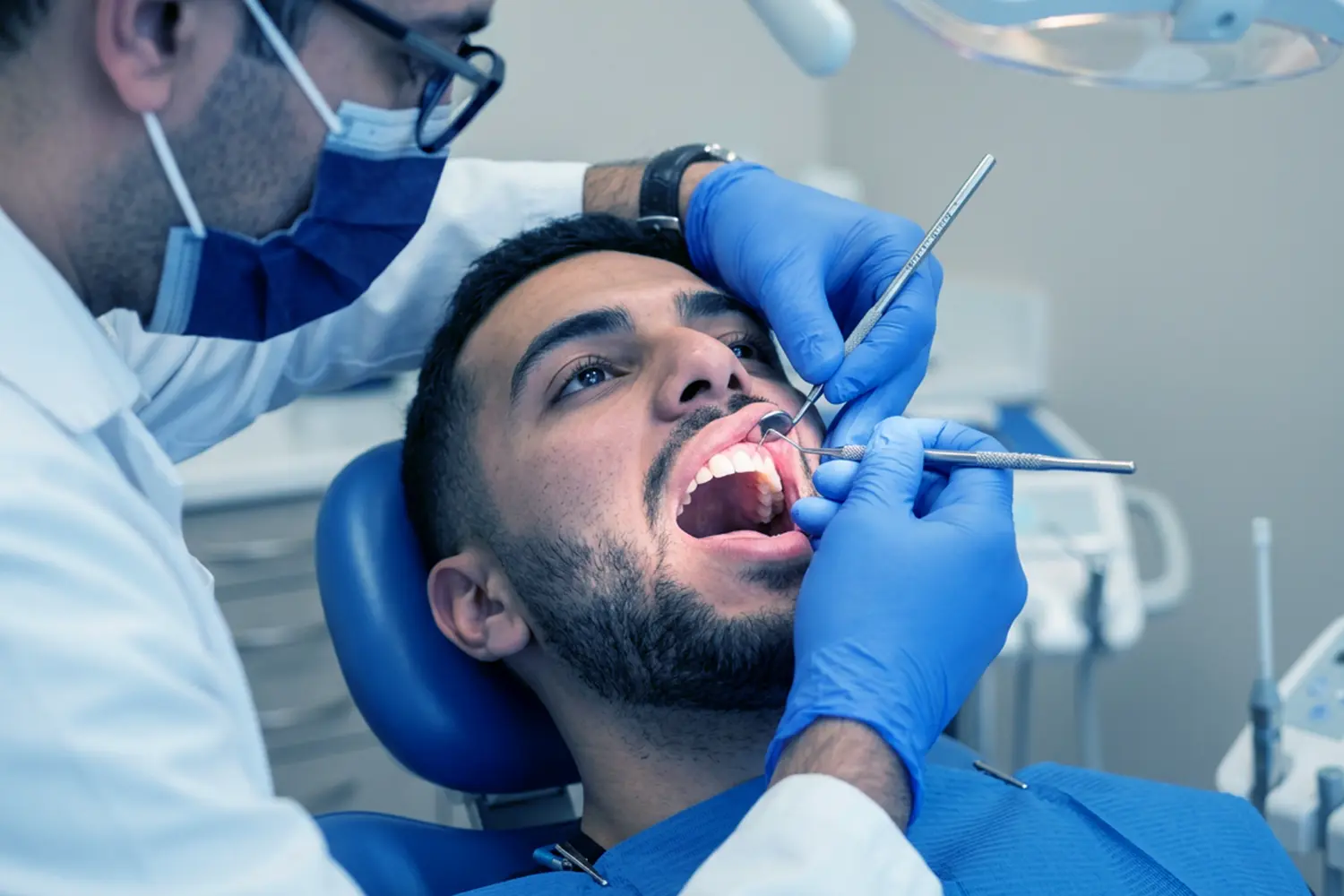
The Non-Carious Cervical Lesions Course offered by Future Vision for Health Training was designed to address many incorrect lifestyle patterns among individuals that have contributed to the widespread prevalence of this condition in society. The course provides healthcare trainees with a clear understanding of the main causes and factors that contribute to the spread of this phenomenon, the symptoms and indicators that signal its occurrence, as well as methods of early diagnosis and treatment to limit its complications.
What is the Non-Carious Cervical Lesions Course and Its Importance in Oral Health
Future Vision for Health Training offers the Non-Carious Cervical Lesions Course to introduce healthcare trainees to this condition, helping them understand its causes and treatment methods. Among the most important topics covered in the course are the following:
1. Acid Erosion (Erosion):
This refers to the loss of tooth structure without the occurrence of caries, resulting from acids attacking the tooth surface and causing erosion without the presence of bacteria or inflammation.
2. Tooth-to-Tooth Wear (Attrition):
This type of tooth wear occurs due to contact between teeth during teeth grinding or while chewing food.
3. Abrasion:
This occurs due to the wear of enamel and dentin caused by external mechanical forces, such as improper brushing or the use of hard tools.
4. Abfraction:
This appears in a wedge-shaped form and occurs due to the concentration of occlusal and flexural forces at the cervical area of the tooth.
Course Contents
Explaining how a patient loses tooth structure due to acid attack (erosion).
The effect of tooth-to-tooth friction (attrition) on the gradual wear of the tooth surface.
How mechanical wear of enamel and dentin occurs due to external forces (abrasion).
Clarifying cervical dental lesions that appear in a wedge shape (abfraction).
Learning about cracked tooth syndrome.
Identifying the main causes and risk factors of non-carious dental lesions (NCDL).
The course also presents the latest treatment methods for non-carious lesions.
Reviewing the most recent prevention methods for non-carious cervical lesions.
Conducting open discussions for trainees through questions and answers.
The Importance of the Course for Oral Health
1. Enhancing the knowledge of target groups about the main mechanisms responsible for tooth loss
The Non-Carious Cervical Lesions Course provides targeted groups such as dental students and dentists with the latest information and scientific studies about this condition, enabling them to help patients avoid its causes and maintain their oral health.
2. Identifying the main clinical manifestations and diagnostic criteria of cracked tooth syndrome
Through the course, trainees learn about the most important warning signs in patients that may lead to this condition, as well as environmental factors that create suitable conditions for tooth wear, helping in prevention and control.
3. Distinguishing different types of non-carious lesions in various teeth to determine appropriate treatment methods
The Non-Carious Cervical Lesions Course helps differentiate between types of lesions that cause tooth structure loss and assists in selecting the most effective treatment method for each case.
4. Promoting behaviors that reduce the risk of the disease
The course contributes to raising patients’ awareness of behaviors that may lead to these lesions, helping them maintain better oral health.
5. Providing preventive strategies to avoid tooth wear
The course equips specialized professionals with effective strategies to combat this condition and contribute to its rapid reduction.
6. Providing dentists with the best treatment approaches to reduce tooth loss
The course helps develop dentists’ skills in adopting innovative solutions to address this condition, resulting in many positive outcomes.
7. Improving dentists’ ability for early diagnosis to enhance patient safety
The Non-Carious Cervical Lesions Course enables trainees to interpret all indicators suggesting a patient may have this condition and improves treatment methods, which enhances patient safety and the quality and efficiency of the services provided.
Causes and Contributing Factors to the Formation of Non-Carious Cervical Lesions
Non-carious cervical lesions occur due to the interaction of several factors, including chemical erosion, exfoliation, and mechanical abrasion. These factors cause the loss of hard tooth tissue at the junction of the gum and enamel. They result from mechanical or chemical factors rather than bacterial infection or inflammation alone.
They appear as smooth superficial grooves occurring below or above the gum line on the lingual, buccal, or interproximal surfaces of the teeth. The most important causes include the following:
1. Causes of Tooth Wear Due to Mechanical Abrasion
In this case, enamel and dentin wear occurs at the cervical area of the tooth due to:
Using a hard toothbrush.
Excessive tooth cleaning.
Using highly abrasive toothpaste.
2. Causes of Chemical Tooth Erosion
This occurs due to the erosion of minerals present on the tooth surface and may result from:
Drinking carbonated beverages and acidic juices.
Stomach acids caused by gastroesophageal reflux.
3. Abfraction
This occurs due to excessive occlusal forces that cause tooth flexure and loss of cervical tooth tissue. Causes include:
Gum recession.
Aging.
Dry mouth.
Genetic factors affecting tooth shape and strength.
Teeth grinding.
Abnormal occlusion between teeth.
Individuals with lifestyles that promote stress, friction, and wear.
Dehydration and reduced saliva flow caused by fluid loss through sweating, which contributes to dry mouth.
Symptoms and Early Diagnosis of Non-Carious Cervical Lesions
There are many factors that lead to the erosion of hard tooth tissue near the gum line without bacterial involvement, which are discussed in the Non-Carious Cervical Lesions Course, including chemical, biological, and behavioral factors.
In the era of personalized and more advanced dentistry, it is important to educate patients about the possibility of developing this condition and the importance of early diagnosis to enable early treatment. Symptoms of non-carious cervical lesions include:
Severe tooth sensitivity, especially when consuming cold and hot drinks or sugary foods.
Pain when chewing food.
Gum recession and exposure of the tooth root.
Cracks appearing along the gum line.
The dentin appearing yellow or brown.
Early Diagnosis Methods
Early diagnosis of non-carious cervical lesions requires the dentist to review the patient’s medical history to understand their dietary habits, such as the consumption of acidic beverages, and to assess oral hygiene habits, such as whether the patient uses a hard toothbrush or brushes excessively, or suffers from teeth grinding.
A clinical examination must also be performed to detect signs of tooth wear at the enamel-gum junction or to identify wedge-shaped lesions.
The dentist should also evaluate whether the patient suffers from teeth grinding or has tooth flexure at the cervical area causing improper biting. Dental X-rays may also be used to ensure there is no caries on the tooth surface.
The Difference Between Non-Carious Cervical Lesions and Dental Caries
The most important differences between non-carious cervical lesions and dental caries are as follows:
Dental Caries
Cause:
The presence of plaque on teeth, which forms from food remnants, saliva, and bacterial acids that are not cleaned properly, affecting the structure of the teeth.
Appearance:
Food remnants on teeth gradually turn into acids over time, causing tooth decay and creating dark cavities or soft holes.
Symptoms:
Patients feel mild pain that gradually increases over time, along with increased sensitivity to cold, hot drinks, and sweets.
Treatment:
Treatment requires cleaning the decay, removing the part affected by bacteria, and then placing a permanent filling.
Non-Carious Cervical Lesions
Cause:
They are not caused by microbes or inflammation but result from mechanical factors, chemical erosion due to acidic foods and drinks, or tooth flexure caused by improper occlusion.
Appearance:
They appear as smooth, hard, or shiny grooves in a crescent shape along the gum line and may appear in a color similar to teeth or slightly more yellow.
Symptoms:
They usually do not cause pain unless they reach deeper layers, but they may cause significant sensitivity to cold drinks.
Treatment:
Treatment may involve addressing gum recession or using cosmetic fillings.
How Future Vision Contributes to Training Specialists in Dealing with Non-Carious Cervical Lesions
Dental students are among the most targeted groups for the Non-Carious Cervical Lesions Course. Future Vision aims to explain how to deal with this condition using the latest scientific prevention and management methods, and it provides trainees with the following:
1. Providing the Latest Scientific Information and Studies to Trainees
The course includes the latest studies and medical information about cervical lesions to help patients avoid their causes and maintain oral health. The main targeted groups include professionals in general dentistry, preventive dentistry, restorative dentistry, as well as pediatric and geriatric dentistry.
2. Providing Accredited Health Courses
Future Vision is distinguished by offering practical training within its courses, granting trainees Continuing Medical Education (CME) hours to help them build confidence and prepare them to face real-world challenges.
3. Providing an Accredited Certificate
Trainees in the Non-Carious Cervical Lesions Course receive an accredited certificate after successfully completing the course from Future Vision.
The certificate is approved by an official accredited training authority in the Kingdom, helping trainees demonstrate their competence in the job market and giving them a competitive advantage. It also equips them with the latest methods and techniques for managing non-carious cervical lesions, increasing employers’ confidence in their skills.
4. Providing Flexibility in Self-Learning
Future Vision provides trainees with great flexibility in accessing the course content from anywhere, allowing them to develop their knowledge and skills in alignment with their professional path.
5. Developing Skills in Managing the Condition
The information provided in the course helps healthcare trainees develop their skills in managing this condition by learning about the latest scientific studies, as well as the most effective early diagnosis and treatment methods for such cases.
The Non-Carious Cervical Lesions Course offered by Future Vision helps prepare specialized dental professionals to improve patients’ oral health by providing them with a clear understanding of the main causes of this condition, the latest early diagnosis techniques, and effective treatment methods, which reduces the complications of the disease. Contact us now to reserve your seat in our upcoming course and enhance your level of expertise and skills.